Mini Munch
Caregivers struggle in food preparation.
Babies start solid foods at around 6 months.
Parents need to be empowered with knowledge.
Knowledge means the right amount of information.
Enough, reliable, but not overwhelming
Knowledge means searchable information.
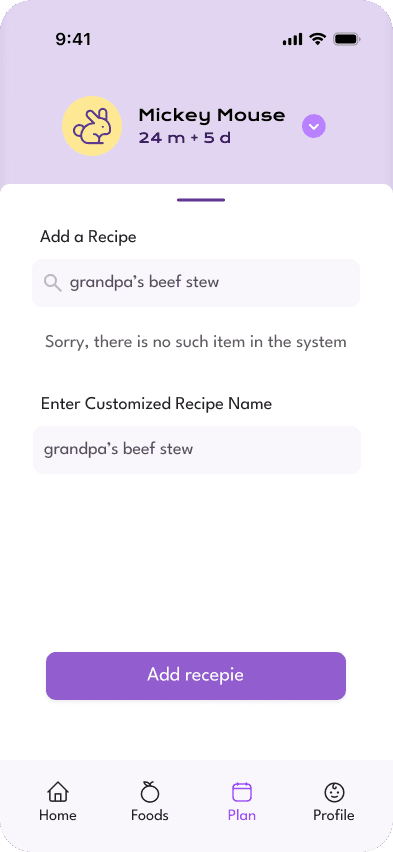
Search for recipe with what you have already
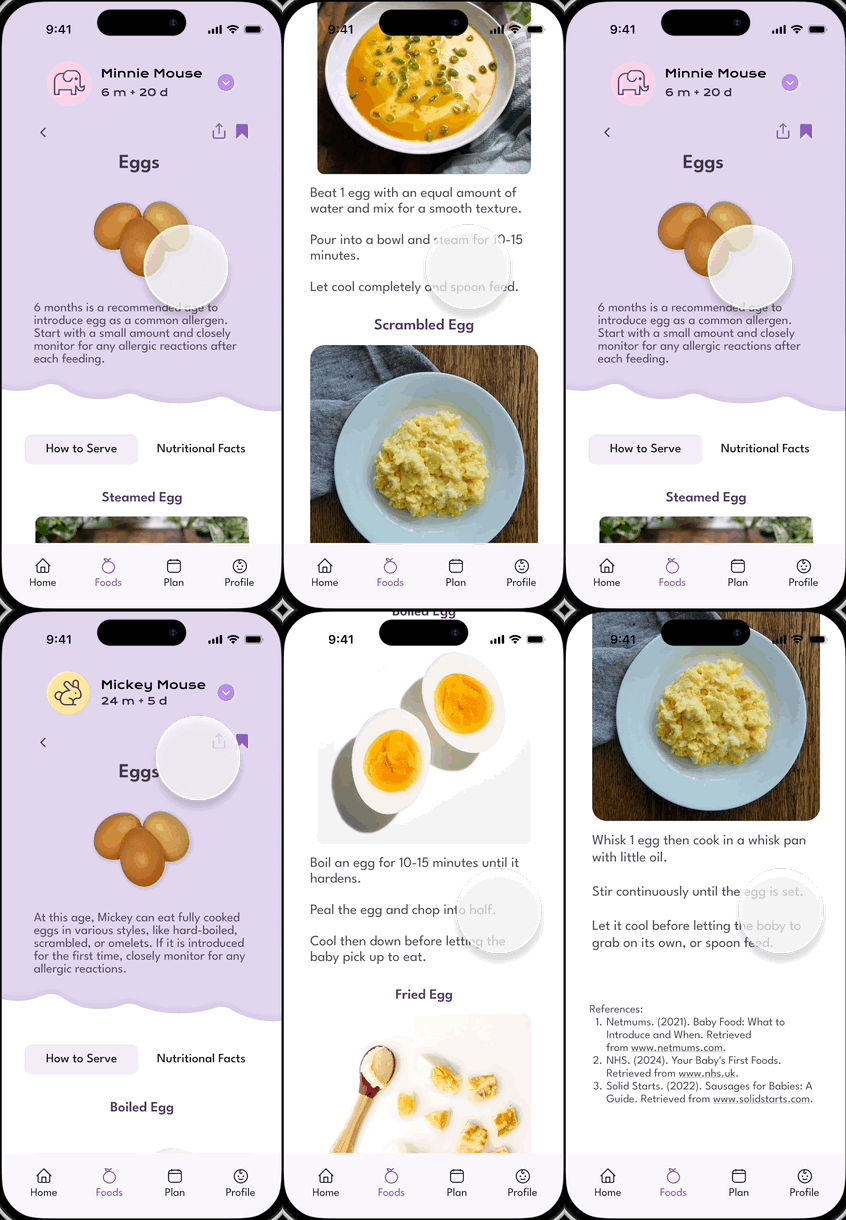
Mini Munch gives parents simple answers regarding baby foods and feeding strategies as daily digest. They can also view more detailed information from reliable resources with references.
Parents do not need to make a grocery list specifically for their child. Instead, search for the ingredient based on what they have in the fridge.
When multiple family members read tips of the day on their phones, baby feeding strategies become their common knowledge, which reduces misunderstanding and promotes smooth communication.
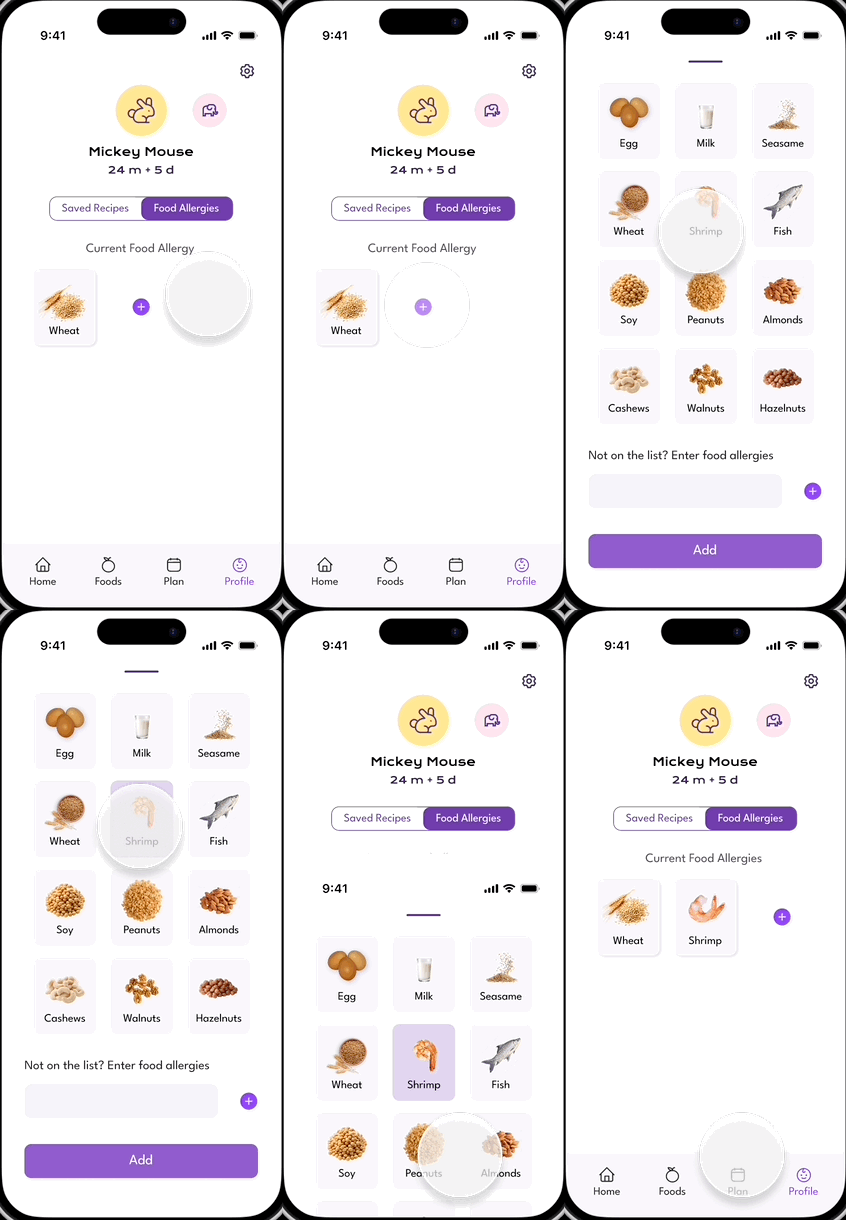
Users are able to view saved recipes. They can also log and view their babies’ allergies. The system will recommend recipes, tips and foods based on baby’s age and allergies.
Parents will be offered daily inspirations of the whole plate, which consist of home-made food, prepackaged meals, and ready to eat fruits.Parents can also choose meal recipes in different categories, from easy and fast food, to family friendly feast.
Mini Munch not only allows multiple caregivers to view, plan, and edit information at the same time, but also allows them to manage multiple babies with simple account switching.
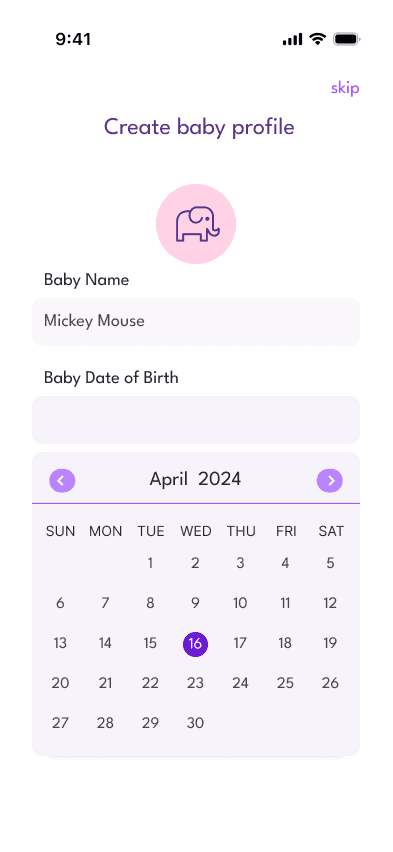
After parents complete baby profile, only age-appropriate and allergy safe recipes are presented to caregivers.
Knowledge means customized information.
You only see what you need to know
Knowledge means organized information.
Only to make parents’ life easier, not crazier
Knowledge means the shareable information.
Only to make parents’ life easier, not crazier
Knowledge means the right form of presentation.
Easy to understand, hard to get wrong
Caregivers embark on an overwhelming journey to introducing solid foods to babies. Not only do they need to spend significant time learning how to prepare these foods safely and healthily, but they also face the challenge of scheduling and rotating meals to ensure their baby receives balanced nutrition. This constant pressure to create varied, nutritious, and age-appropriate meals can lead to stress and anxiety, especially for those juggling multiple responsibilities.
Baby Solid Food App
Mini Munch helps parents plan, prepare and learn about baby solid foods.
When babies can sit up and show interest in foods beyond milk, they are ready to eat solid foods, which usually consist of purees, baked goods, steamed vegetables, and more. As babies grow, the texture progresses and the amount increases, until it becomes the primary source of nutrition, although breast milk or formula remains important throughout the transition.
Problem
Background
Solutions
My Role
Define the Problem

Persona 01
Persona 01
Empathy Map =1
Empathy Map =1
Jobs To Be Done
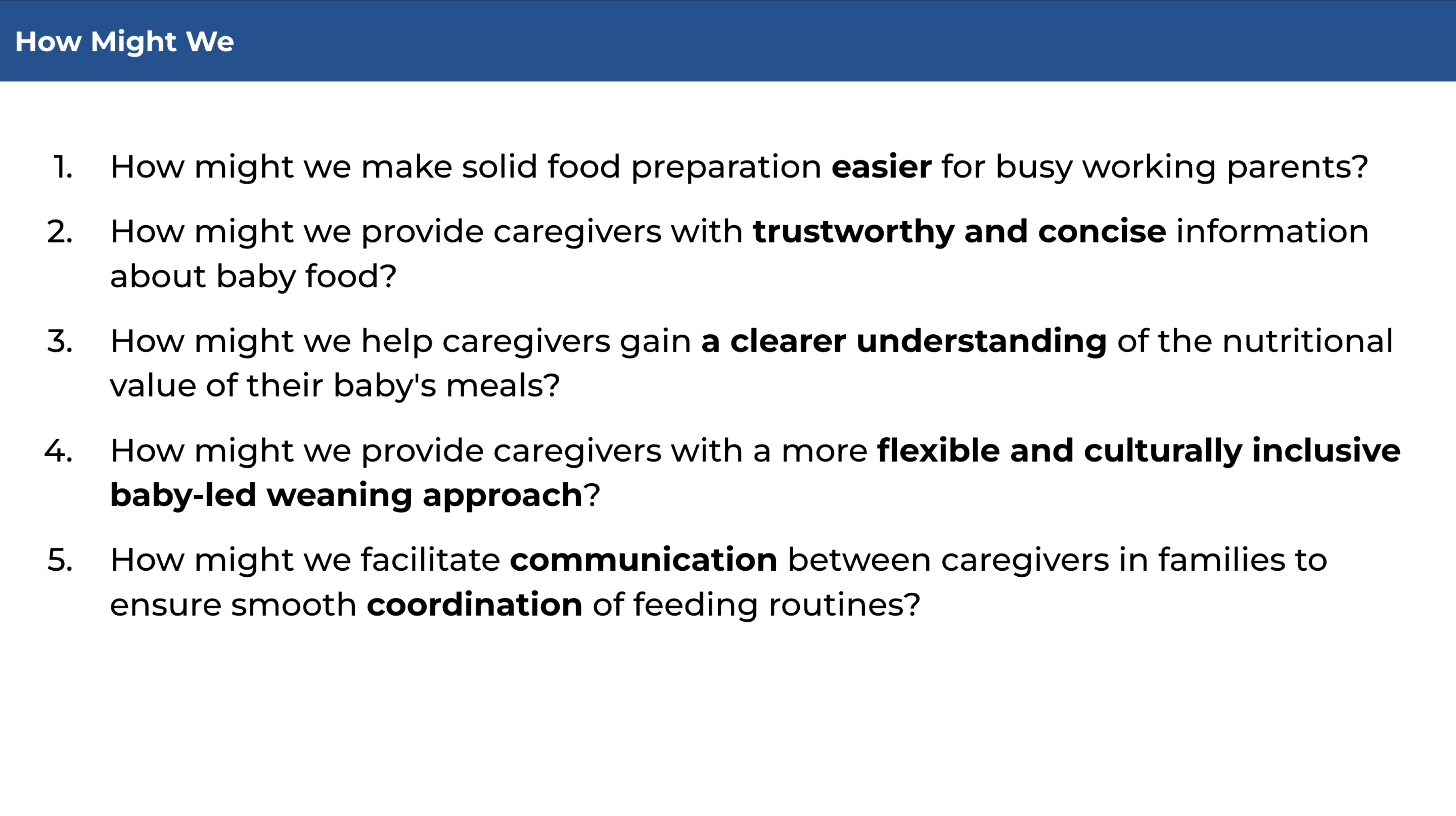
How Might We

Secondary research
User interview
Empathy map
User persona
Jobs to be done
How might we
Research
Information Architecture
User flow
Sketching
Low-fidelity wireframe
High fidelity Prototyping
Design
Moderated usability tests
Testing

Understand the Users
User Research
How do I make users feel both inspired and secure?





First-time working moms...
want to explore diverse tastes and textures
Experienced moms
The site map has changed accordingly.
Minimized
Relocated
Added
How can users find a recipe and use it?
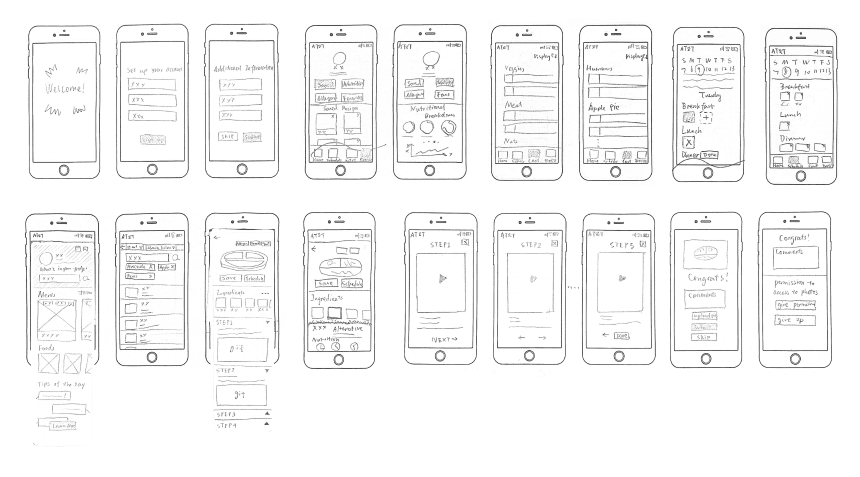
I made sketches for the main screens
... And built up the low and high fidelity prototypes gradually
Take Away
Step 1 Find a recipe.
Step 2 Use it.
Some parents prefer everything that is freshly made with diversity, others just want to make food that is fast and easy. I can provide daily plate inspirations with several versions of what a meal could look like. Some plates could be more focusing on certain categories, while others can have a little bit of everything!
All of the dishes from the plate are clickable to recipes. Users are able to view the ingredients, nutritional values, and steps of the dishes.
No matter it is first time busy mom who just want to make quick meals, or experienced mom who wants to provide varied textures and tastes, they can easily find out meals according to their own needs.

Ready to eat
These foods could be banana chunks, yogurt, or prepackaged puree pouches, which only require minimum preparation to serve.

Homemade Bites
These homemade meals might require a moderate to high amount of time and effort. They are freshly made and very tasty.

Heat to Serve
Prepackaged food such as frozen meatballs or vegetables such as broccoli only need to be steamed or boiled for babies to eat safely.

Family Meals
Adapted family dishes or culturally inspired meals such as pasta with unsalted tomato sauce are great options for older babies.

Pasta
culturally inspired family meal
Broccoli
vegetables that only require boiling
Recipe Development
Lower cost
Using local resources
Initial Time Investment
Commercial Food
Convenience
Safe
Time-saving
Higher cost
Potential reliance
Early Introduction of Varied Textures
Less picky eaters
Initial adjustment
Parent Educational Interventions
More Knowledge
Less anxiety
Time investment
Baby-Led Weaning
Mess
Safe concern
Less parental control
healthier weight
Parent-Led Weaning
Food intake control
Time-consuming
More stressful
Receive tons of knowledge, whether it is related to them or not
Digest minimum information that is suitable and important to their babies’ age
Plan and buy grocery specifically for babies every week
Use the ingredients they already have to make baby meals
Each family member is learning totally different things
The whole family learns together and communicates with each other
View contradictory comments or suggestions from other parents and feel even more anxious or confused.
Be provided with consistent reliable resources from authority
Waste time viewing fancy meals from social media and comparing themselves to others
Choose meals that are suitable for the family schedule and condition
What should babies eat?
From prepackaged food to freshly made meals, parents should be provided with a variety of options, according to their own preferences and circumstances.
From traditional spoon feed method to baby led weaning, parents could adopt either or both methods. They also need to learn about nutrition and feeding mechanism.
What should parents learn?
fast and easy
culturally inspired
less messy
family friendly
vegetables
starch
potential allergies
iron rich
fruits
proteins
Before
After
No Wikipedia!
No Social Media!
No shopping list!
More inspirations!
Organize!
Schedule!
Next Meal Reminder
new user


At first, I chose orange-yellow colors because I wanted my baby food app to be vivid and cute.
However, the color does not go well with food, since much of it has a brown tone.
With everything blended in, the whole app looks muddy and dirty, and nothing stands out...
How about increasing saturation of the text and background?
No, it only makes tired parents barely able to open their eyes...
I went to the opposite color - violet, which stands out from food
it is soothing like lavender, and yummy like a taro ice cream.
I also created the bubble shapes, which gives a hint of cuteness.
How can I make the app more fresh to the eyes without losing the “baby” element?


Adding skip option
I added a skip option for users who want to explore quickly or prefer not to share personal information.

Replace the filter icon with “filter” on the button
When users were trying to find a recipe, they rarely used the filter to limit options. I changed filter icon to a button with the word “filter”, which made it more notable to use.
Only show known allergy in profileUsers felt overwhelmed by all the food cards in the profile. I eliminated all food allergies and added a button to allow editing.


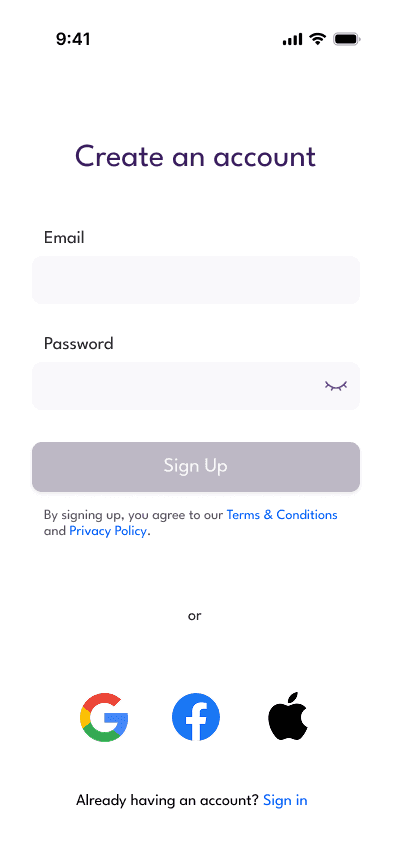


Design the App
Usability Test
This is my first student project with a completed design process.


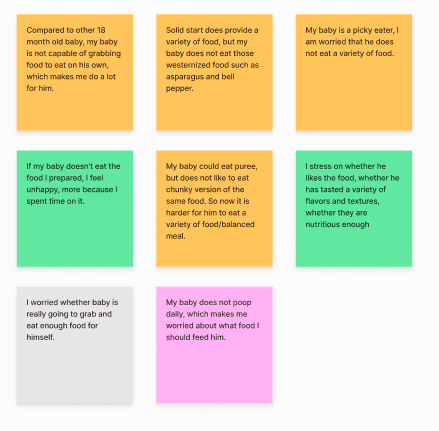


I conducted secondary research on how parents are dealing with baby food preparation.
I also interviewed 5 caregivers of babies to gain a better understanding of why parents are struggling.
Based on the research result and the affinity map, following are the reasons of caregivers’ frustration:
Lack of Knowledge
Many parents are overwhelmed by conflicting ideas from unreliable resources on social media. Seeing fancy meals prepared by other parents also cause anxiety.
Food Refusal
Parents not only feel unhappy about the failure of their hard work, but also worry about whether their babies are taking enough nutrition over time, such as protein and iron.
Time Constraints
Some participants are working moms and they do not have enough time to learn about feeding mechanism, plan for grocery, prepare for the meals and feed their babies.
Family Conflict
Conflict starts when older generations have different opinions about how to prepare and feed from parents. Moms find it hard to try new ways they have learned.
Safety Concerns
When babies are still learning to chew and swallow, caregivers often worry about the risk of choking. They may also be concerned about potential allergic reactions.
Cultural Barriers
Even though some parents would like to use Baby-Led-Weaning, the lack of considerations for cultural diversity prevents parents from systematically adopting it or trying it again.
Their jobs include but are not limited to:
Exploring a wider variety of ingredient combinations, such as complete meal recipes
Understanding about nutrition, including babies’ developmental needs and food nutritional value
Learning about feeding approaches and mechanisms, such as baby-led weaning
From my previous research on how parents prepare meals, I discovered several strategies to help them cope with frustrations. Each strategy presents its own set of benefits and challenges.
I used social media, baby food apps, websites, books, YouTube videos, and AI to gather ideas. The food that can be served to babies falls into the following categories:
A. Inspire parents with a plate of all these options!
B. Show recipes homemade bits & family dishes in categories


After finding a recipe, users might not cook right away. Instead, they can save the meal for later, or schedule the meal in the future. Other family members can also view the schedule and edit it.
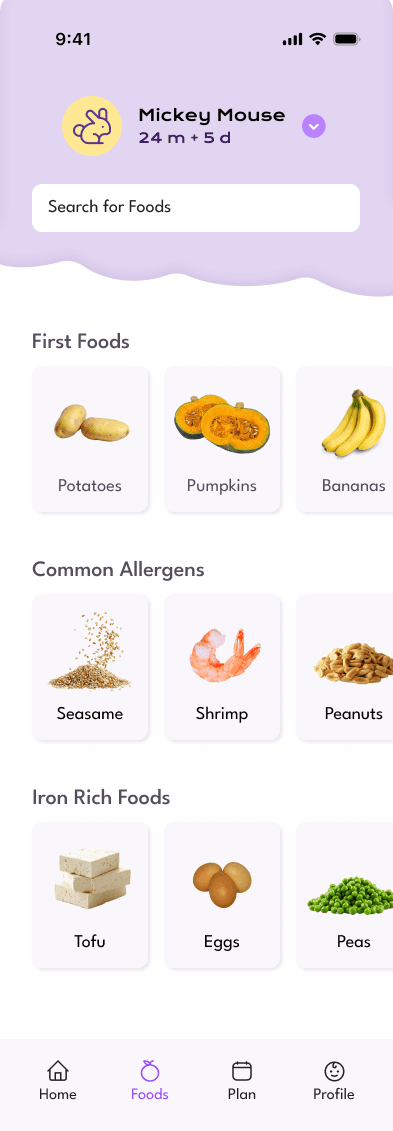


C. Provide ways to process foods for beginners AND older babies.
When babies start solid foods, it is safe to introduce single ingredient foods one by one to avoid allergic reactions with unknown ingredients. When common allergies are ruled out, single ingredient foods become very handy as a part of easy prep meals.
What should users’ experience be like in my app?
What kind of meals can parents offer their babies?
How can I make parents feel less stressed?
New or Experienced, they ask the same 2 questions over and over:
“What does my baby eat for the next meal?” & “Is it safe and nutritious?
They are motivated to improve upon their past efforts—they seek deeper, more detailed information that helps them better understand nutrition, feeding mechanics, and flavor development.
want to find an easy way to make healthy meals.
They also want to be educated, and learn to communicate with the whole family regarding baby food.
To understand my users better I conducted 5 in person interviews with main caregivers of their babies. And I found that...
The app provide multiple ways of inspiring users to find a perfect meal recipe. Users can find a recipe according to the ingredients they already have at home, users’ preferred cooking time, the meal styles that suit their family culture. Besides, users can copy the whole plates including everything their babies need in a meal. They are also able to find previously saved recipes.

To test whether parents are able to find recipes and schedule meals using the app, I conducted 2 rounds of usability tests, the first with 5 users and the second with 3 users. I assigned users to create an account, log a food allergy, use filters to find a recipe, and schedule meals. All users are able to complete the tasks. I made some changes according to my observation of their behaviors.
Update user flow and site map constantly I used user flow chart and site map only once or twice during my design process. These tools are very useful to help me think more clearly about what should be in my app and how to organize it.Stop and think before sticking to the wrong directionIn the first half of the design process, I added a lot of features such as social media, and shopping cart. These are the sunk costs and should be considered in the next steps, because it could not only prevent me from designing the minimal viable product, but also prevent users from reaching their goalsBe confident with my thinking processThe features and function in other apps might help inspire me to find new solutions to the problems. However, it might exist not because they are reasonable, but just a mistake. Therefore, I need to use my own critical thinking instead of being carried away by how other apps are designed.Don’t worry about the back and forth of designProblem solving is not a linear straight line. Rather, it is the nature of design. From ideation to user testing, it is the repetitive cycles that make the solution better and smarter.
The High Fidelity wireframe and prototype